Start with the task geometry
Scissor lifts move straight up within their footprint. They fit jobs where the machine can sit below the work: ceiling fixtures, racking, signage, and façade access with vertical reach only. If obstacles force you to work from the side, compare boom options on the aerial lift rental page.
Key dimensions to note before calling: - Max platform height needed versus allowable machine height under doors or mezzanines - Minimum aisle width and turning space in local distribution buildings - Platform capacity requirements based on tools and materials
Local conditions that change the comparison
The regional climate brings intense humidity and heat that stress batteries and electronics. Indoors, electric scissor lifts remain the norm because of zero emissions and compact size, but runtime and charging windows matter more on long shifts. Outdoors, high precipitation and level terrace soils can leave jobsite surfaces soft; rough‑terrain scissor lifts with higher ground clearance and traction features handle unfinished grades and wet patches more predictably than slab units.
- Indoor work: prioritize electric slab scissor lifts for warehouses and commercial facilities. See electric scissor lift rental.
- Outdoor work: prioritize diesel or hybrid rough‑terrain scissor lifts for construction and industrial sites with uneven or saturated ground. See rough terrain scissor lift rental.
Power source and runtime planning
Electric units suit enclosed spaces and short rollouts between tasks. Heat and humidity can shorten effective runtime, so charging logistics inside facilities matter. For sustained outdoor elevation around industrial sites or on perimeter maintenance, engine‑powered scissor lifts keep consistent duty cycles when shore power is distant.
When scissor lifts are not the right fit
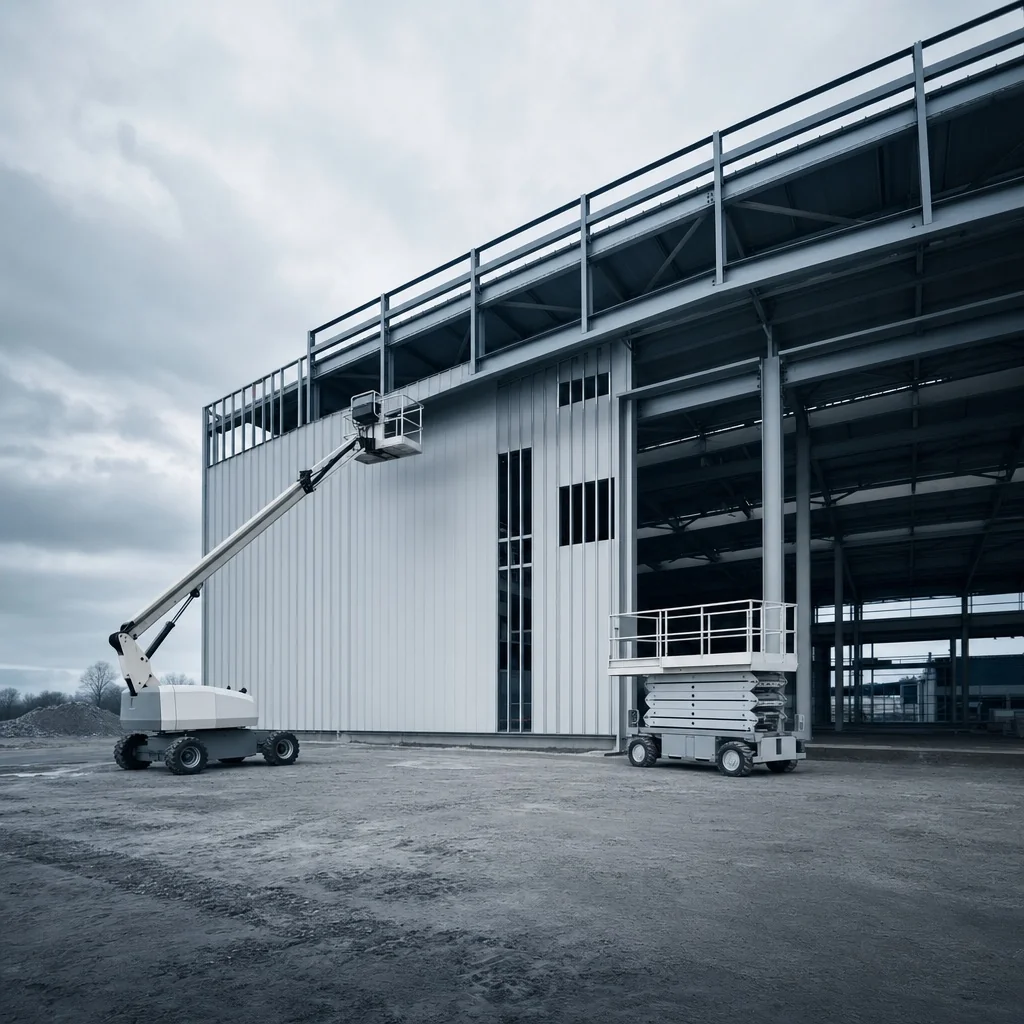
If the platform cannot sit directly under the task or there are overhead obstructions, articulating or telescopic booms provide horizontal reach. Start comparisons on boom lift rental for exterior façade, pipe rack, or conveyor crossings.
Call Baton Rouge Scissor Lift Rentals
Discuss the work height, floor or ground conditions, and power access at (225) 831-7966. That baseline is enough to narrow suitable models for Baton Rouge environments.