Define the work envelope
Identify where equipment like /aerial-lift-rental/ and /telehandler-rental/ will travel. Barricades near lift paths should be visible at night and anchored appropriately for the surface. In tight yards, swing gates or removable panels preserve access for occasional oversized loads.
Ground and weather considerations
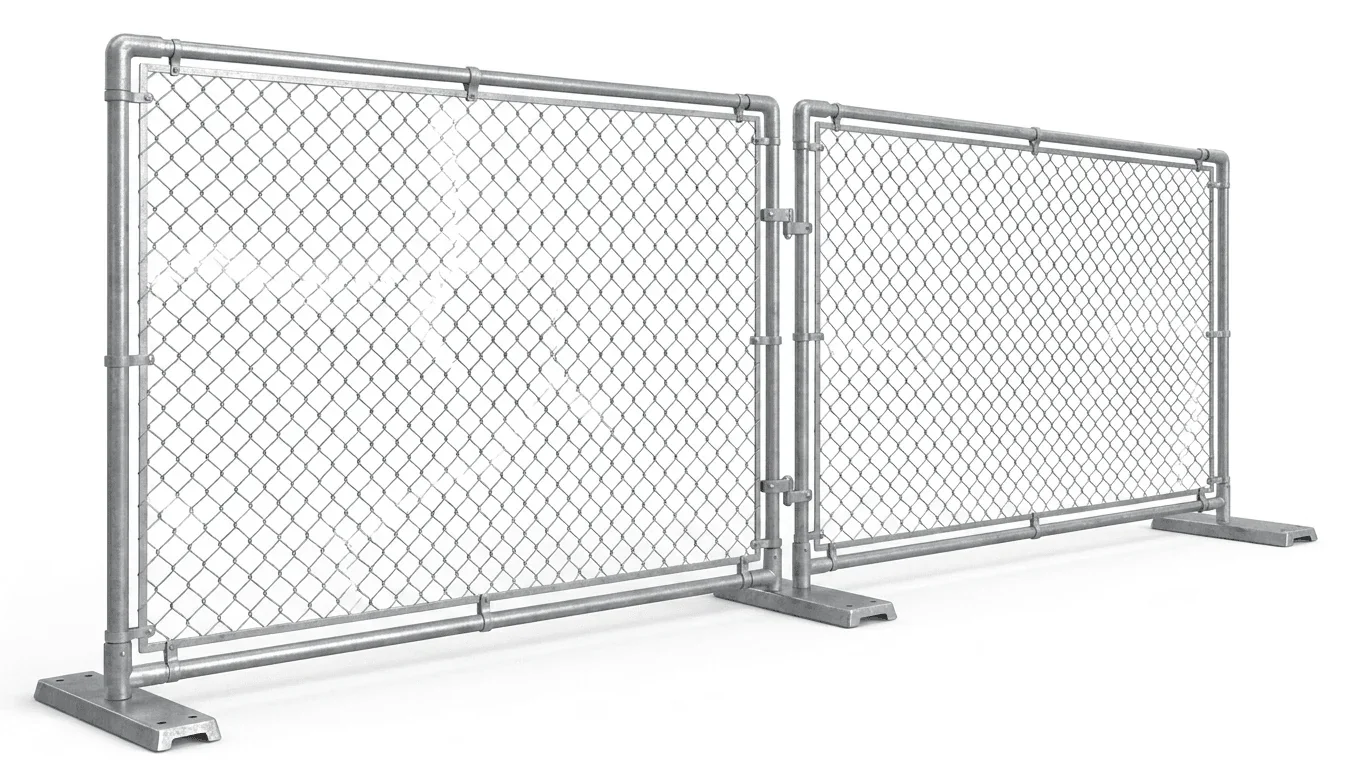
Soft, wet ground common after storms can loosen bases. Wider footings or site-stability factors improve stability on saturated soils. In open, breezy areas along industrial corridors, panel height and mesh density influence wind loading; choose accordingly based on exposure and setback room.
High-humidity, corrosive environments
Near process units and waterfronts, corrosion resistance matters. Galvanized or coated components maintain integrity when exposed to humid air and washdown cycles.
Pedestrian vs. vehicle interfaces
Differentiate lanes with barricades, fencing, and lighting from /generators-light-towers-rental/ for dusk or night work. Place openings where sightlines are clear and where forklifts or /rough-terrain-scissor-lift-rental/ units can square up before entering.
Staging, storage, and reconfiguration
Panel stacks and bases take space. Plan a laydown area that doesn’t interfere with container doors at /storage-containers-rental/ or with charging zones for /electric-scissor-lift-rental/ inside warehouses. Expect reconfiguration as tasks shift; modular systems speed changes without impacting adjacent work.
When to step up or down
- Step up: high exposure to wind, long-term placement near corrosive atmospheres, or heavy vehicle interfaces.
- Step down: short-duration, low-exposure tasks where simple barricades define a small exclusion zone.
Actual site conditions, the selected unit’s instructions, and facility procedures govern setup and use.