Fit the machine to the path and floor
Confirm the narrowest aisle, tightest turn, and smallest doorway on the route. Then consider: - Platform height needed for lights, inventory slots, or low roof systems - Floor type and allowable point loading on mezzanines or elevated decks - Obstructions like low ducts or sprinkler lines that affect approach
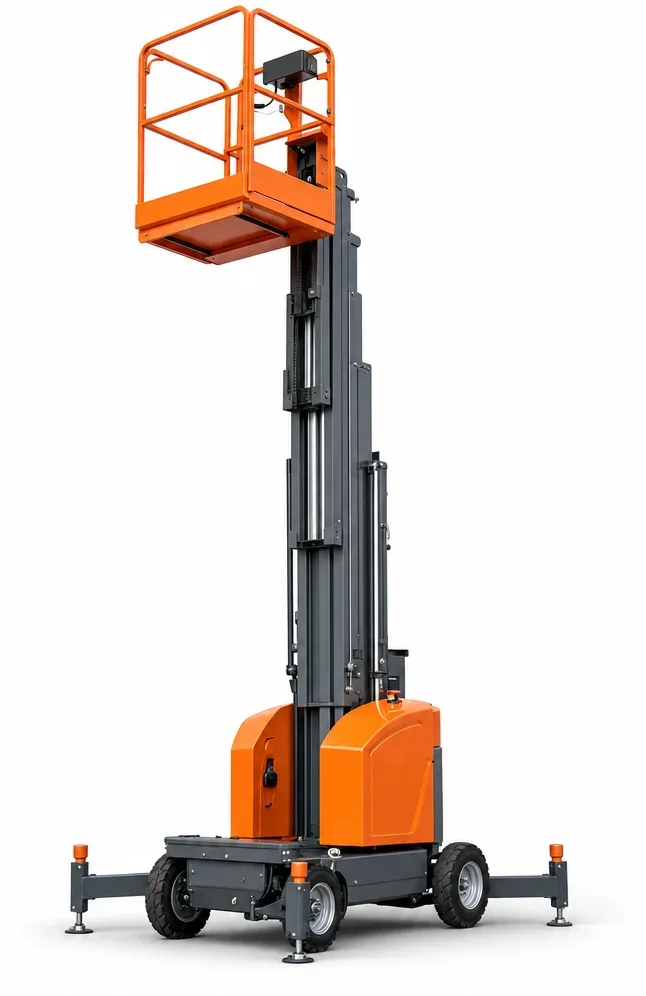
Vertical masts excel where scissor lifts are too wide or heavy for the surface.
Local factors in Baton Rouge interiors
- High humidity: Battery endurance and charger placement matter for multi‑shift work. Interior staging with reliable ventilation helps manage moisture.
- Moisture carry‑in from docks: Non‑marking tires and clean, dry staging reduce floor impact when weather brings damp conditions into the building.
- Mixed‑use buildings: Some local distribution buildings connect directly to covered loading; check floor transitions, slopes, and threshold heights.
Narrow by platform style and power
- Platform style: Single vs. extension deck for reaching over conveyors or shelving edges.
- Width and weight: Choose the smallest footprint that still reaches the task while keeping within floor loading limits.
- Power: Electric drive for low noise and zero on‑site exhaust; confirm charging access relative to shift timing.
Typical Baton Rouge applications
- Inventory cycle counts and labeling in narrow aisles
- Lighting, sensor, and utility work below roof trusses
- Signage and safety equipment updates near covered docks
If wider work areas or rough surfaces are involved, compare /electric-scissor-lift-rental/ for slab work or /rough-terrain-scissor-lift-rental/ for exterior tasks.
Planning checklist before you call (225) 831-7966
- Narrowest aisle and doorway on the route
- Required platform height and reach over shelving
- Floor type, load limits, and any slopes or thresholds
- Charging location and expected runtime in humid conditions